What's Inside the Roman Baths: The Great Bath, the Museum and the Gorgon's Head
What is inside the Roman Baths: the museum, Sulis Minerva's head, the Gorgon's head, and the Great Bath, East and West Baths you walk through.
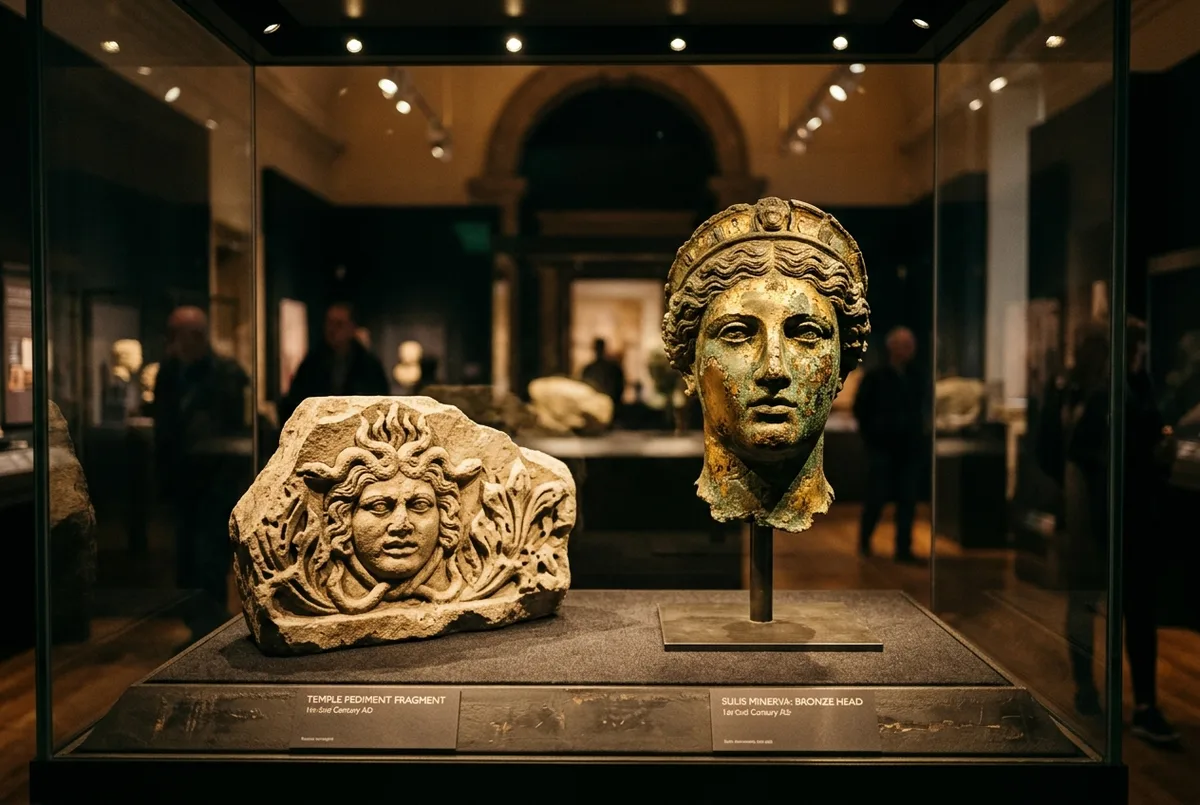
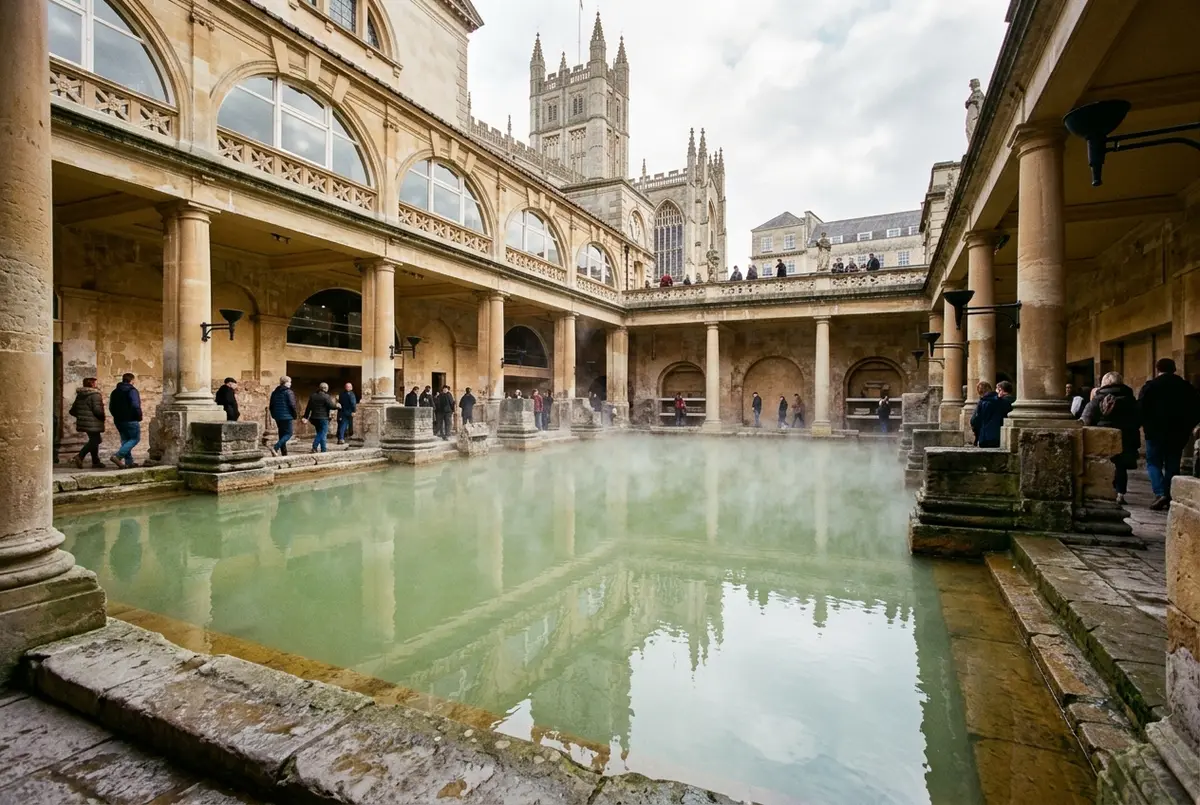
What is inside the Roman Baths? One continuous building holding a museum of Roman finds (the gilt bronze Sulis Minerva head, the Gorgon's head pediment, the Beau Street Hoard of 17,660 coins), the open-air Great Bath, and the heated East and West Baths with their plunge pools.
 Roman Baths Entry Ticket with Audio Guide From $30.76 · Simplest way in, with an audio guide See dates
On this page 7 sections
What is inside the Roman Baths? It’s one continuous building, not several separate attractions: a museum of Roman finds, the open-air Great Bath, and the heated East and West Baths beyond it.
What rooms will I actually walk through inside the Roman Baths?
A single route carries you from the museum galleries out to the open-air Great Bath, then through the East Baths’ heated rooms and the West Baths’ plunge pools before the shop. The official visit page describes guided tours exploring the famous Great Bath and suite of Roman bathing rooms in the East Baths, and the free-roaming ticket route follows the same path.
| Area | What you see | Roughly where on the route |
|---|---|---|
| Museum galleries | Sulis Minerva’s head, Gorgon’s head, Beau Street Hoard, curse tablets | Start |
| Great Bath | Open-air pool fed by the Sacred Spring | Middle |
| East Baths | Heated rooms, hypocaust remains | After the Great Bath |
| West Baths | Plunge pools, Circular Bath | End of the complex |
| Sacred Spring | Source of the hot water seen throughout | Visible at several points |
Does Bath have a museum, and what’s in its collection?
Yes. The museum holds thousands of archaeological finds from pre-Roman and Roman Britain, and its two best-known objects are both original pieces: the gilt bronze head of the goddess Sulis Minerva, and the Gorgon’s head that once looked down from the temple pediment.
Picture two kids stopping dead in front of the Gorgon’s head and asking what it actually was for. It’s not a monster carving for its own sake: it sat at the top of the temple front, facing the courtyard, as the image that gave the whole building its identity. The Sulis Minerva head, meanwhile, was once part of a larger cult statue of the goddess the Romans worshipped here, a hybrid of the local deity Sulis and their own Minerva.
“This fearsome pediment has fascinated scholars for hundreds of years.”
Roman Baths official site · source
What is the Beau Street Hoard, and why is it on display?
It’s 17,660 Roman coins spanning 32BC to 274AD, dug up in eight fused money bags on Beau Street in Bath in 2007, and shown in an interactive case in the People of Aquae Sulis Gallery. The size of the hoard, not any single coin in it, is what makes it one of the largest ever found in Britain.
What's on display
Source:Roman Baths official siteWhat were the curse tablets, and can you read them?
They’re small sheets of inscribed metal that people threw into the Sacred Spring as personal, private prayers, and the collection covers tablets from 130 individuals. Many offerings thrown into the spring over the centuries are displayed alongside them, giving a rare, intimate window into what ordinary visitors to the spring actually wanted.
What are the East and West Baths, and were they heated?
They’re the suites of hot and warm rooms on either side of the Great Bath. A Roman bath house like this one moved bathers from a cold room to a warm one to a hot one, heated from below by an underfloor hypocaust system, and the hottest room ran at roughly 40 degrees C. The full mechanics of that heating system are covered on the Roman bath house explainer.
What is the Great Bath, and why is it open to the sky today?
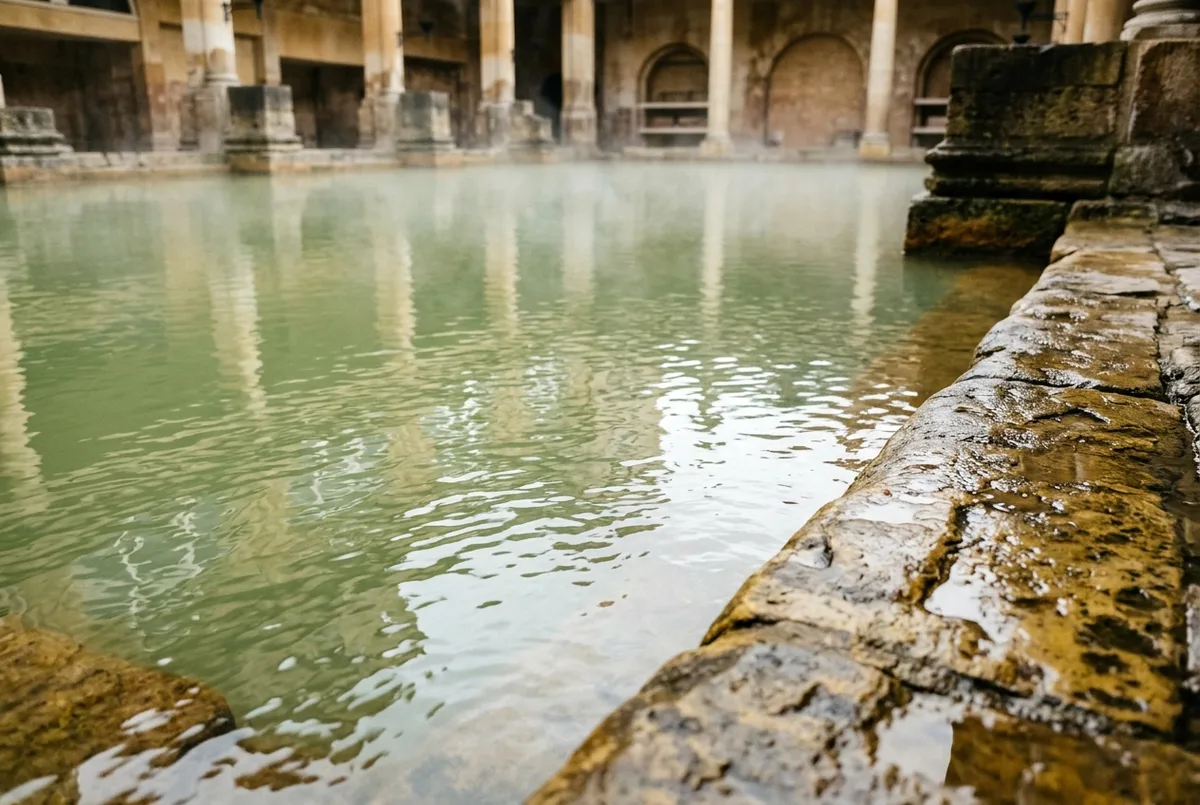
It’s the large open-air pool at the centre of the site, fed by the same Sacred Spring that has risen there for thousands of years, as the official visit page notes. The roof that once covered it is long gone, which is why modern Bath’s rooftops are visible above the pool today rather than a Roman ceiling.
If you’re deciding whether the whole site is worth the admission price before you plan around it, see the verdict page; for how long to allow once you’re there, see the opening hours page.
Questions
Is there a toilet inside the Roman Baths?
The official pages I checked don’t document public toilet locations inside the historic galleries, so I won’t guess. Ask at the reception desk when you arrive, since modern facilities are added separately from the ancient fabric.
Can you take photographs inside the museum and the Great Bath?
The site allows photography for personal use, but check current signage on arrival, since specific objects or temporary exhibits can carry their own rules.
Is the museum included in every entry ticket, or is it a separate charge?
It’s included. The museum, Great Bath and the full bathing complex are all covered by the standard admission ticket, with no extra charge for the collection.
Are the Gorgon’s head and Sulis Minerva head original Roman objects or replicas?
Both are original Roman objects recovered from the site, not replicas, which is part of why they’re treated as the museum’s two signature pieces.