What Is a Roman Bath House? How the Rooms at Bath Actually Worked
What is a Roman bath house: the frigidarium, tepidarium and caldarium mapped onto Bath's real East and West Baths, and how they were heated.
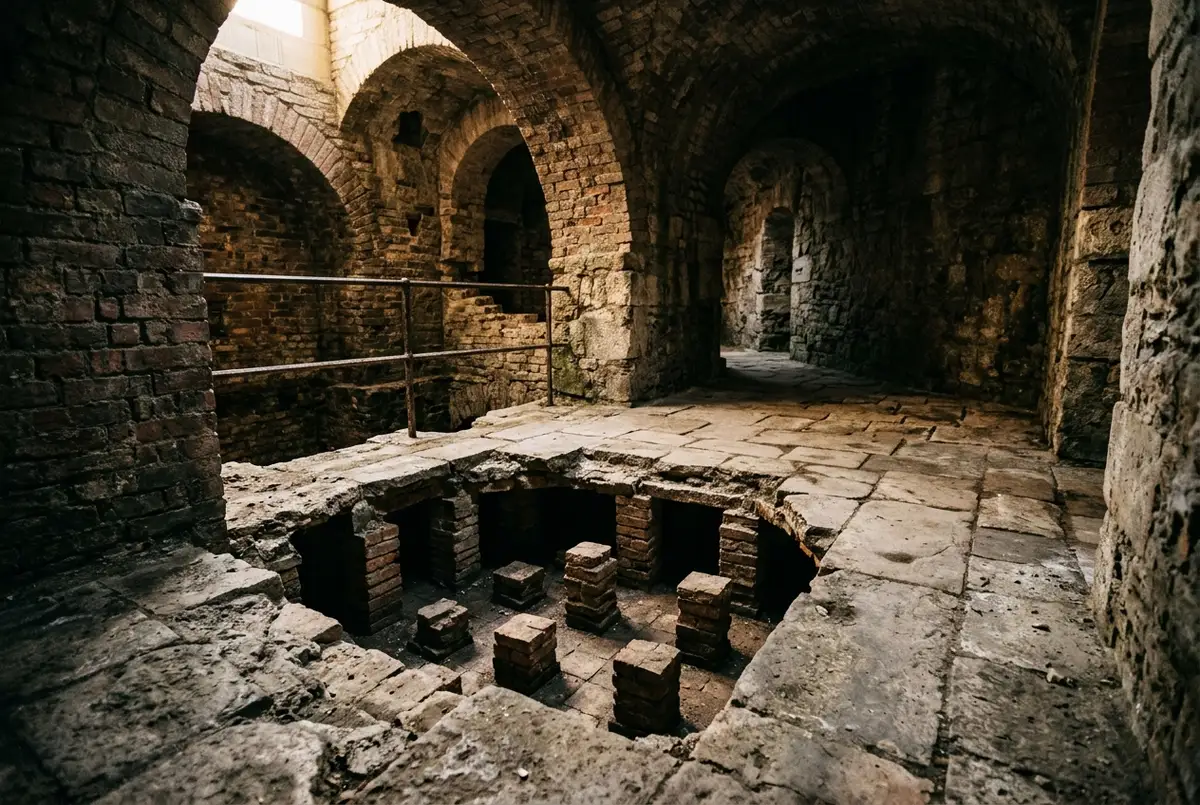
A Roman bath house (thermae) moved bathers through cold, warm and hot rooms heated by an underfloor hypocaust system. At Bath, that sequence maps onto the real East and West Baths either side of the Great Bath.
 Roman Baths Entry Ticket with Audio Guide From $30.76 · Simplest way in, with an audio guide See dates
On this page 7 sections
A Roman bath house was a sequence of rooms, not one pool: Romans called the whole complex thermae or balneae, and bathers moved through cold, warm and hot stages in order. At Bath, that same sequence maps directly onto the East and West Baths you walk through today.
What is a Roman bath house called?
Romans called it thermae or balneae, and a visitor moved room by room through a cold, a warm and a hot stage rather than just soaking in one pool. The building itself, not any single bath within it, is the “bath house.”
What rooms did a bather actually pass through?
The standard route ran from an unheated frigidarium to a warm tepidarium and then a hot caldarium, getting undressed first and moving through each stage in turn. At Bath you can trace that same path through the East and West Baths either side of the Great Bath, following the suite of Roman bathing rooms described on the official visit page.
| Textbook room | Bath’s equivalent | What you can see today |
|---|---|---|
| Frigidarium (cold) | Circular Bath | Cold plunge pool with projected bather film |
| Tepidarium (warm) | East Baths tepid bath | Pool fed by its own pipe |
| Caldarium (hot) | West Baths heated rooms | Surviving hypocaust pilae |
| Laconicum (sauna) | Roman Gym area | Remains of the sauna and a preserved doorway |
The Great Bath by the numbers
Source:Roman Baths official site“Bathers would get undressed and then progress from an unheated room (frigidarium) to a warm room (tepidarium) and then to a hot room (caldarium).”
English Heritage · source
Which rooms at Bath match the East Baths and which match the West Baths?
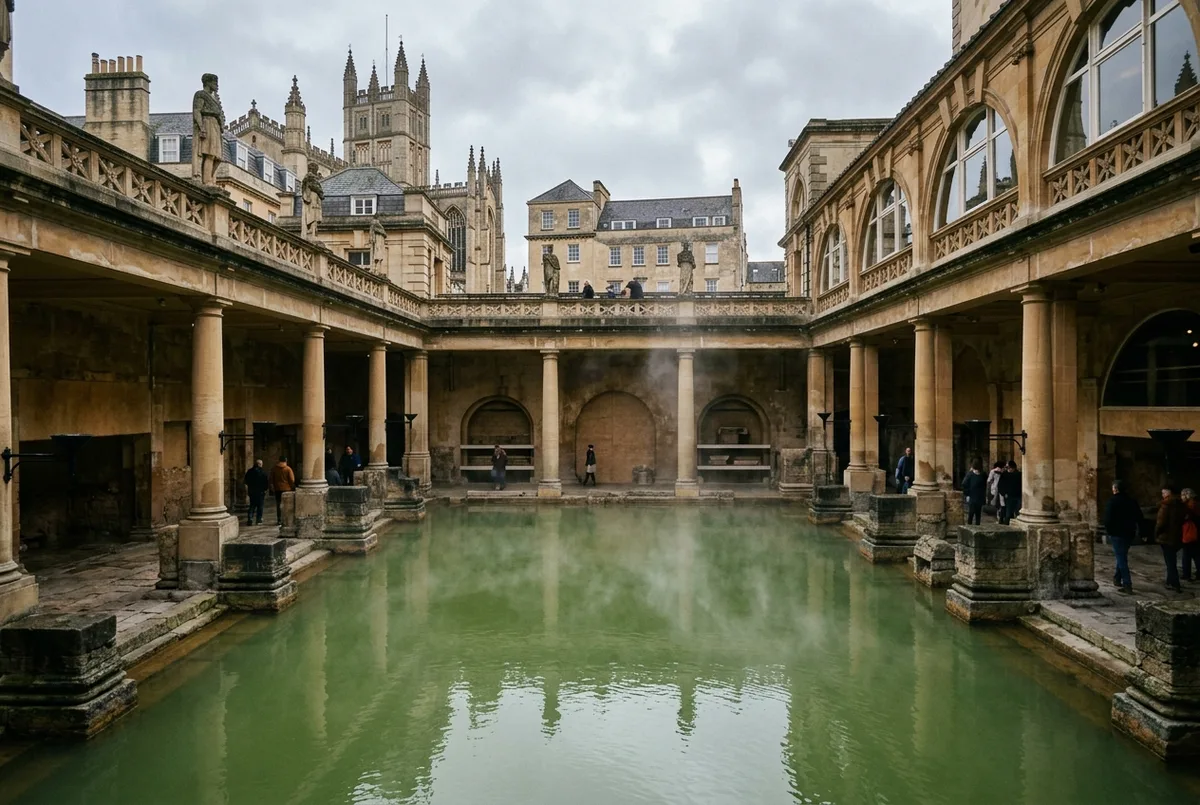
The East Baths held a large tepid bath fed by water that flowed through a pipe, while the West Baths carry a sequence of pools and heated rooms, plus the Circular Bath, a cold plunge brought to life today with animated projections and a film of life-size bathers on the walls.
How were the Roman Baths heated?
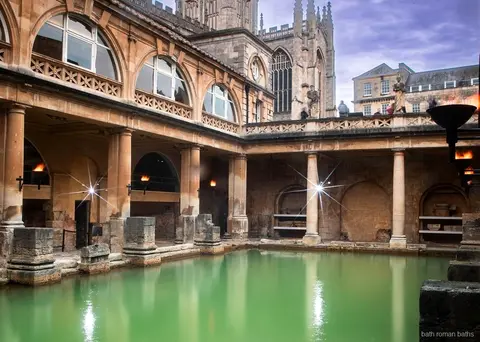
A hypocaust system raised the floors on pillars and ran hot air underneath them, and the West Baths at Bath still show surviving hypocaust pilae, the actual pillars that once held the floor up. Picture walking from the sunlit Great Bath terrace into the dimmer West Baths and noticing the ground sits higher in places: that’s the same hypocaust pillars you’re standing over, visible today as the surviving pilae rather than hidden under a modern floor.
Was there a gym or sauna at the Bath complex?
Yes. A paved courtyard served as the Roman gym, where ancient visitors worked out, and next to it sits the remains of a laconicum, a Roman sauna, reached through one of the best-preserved doorways from Roman Britain.
How hygienic were Roman baths?
The water at Bath came continuously from a hot spring rather than standing still, and the complex’s plunge pools and heated rooms were built in a strict sequence specifically to move bathers from dirty to clean. That’s a meaningfully different picture from a single stagnant pool: bathing was central to Roman life and highly ritualised, not a casual dip.
The Great Bath itself is 1.6 metres deep and lined with 45 sheets of lead, which was the engineering that made a pool this size watertight for nearly two thousand years. For the wider history of how the site came to be built and later rediscovered, see the history pillar; for what you’ll actually walk through on a visit, see what’s inside the Roman Baths.
Questions
What is a laconicum?
It’s a Roman sauna, a small, intensely hot room used for sweating rather than bathing in water. At Bath, its remains sit next to the Roman Gym courtyard.
Why is the Great Bath lined with lead?
Lead sheeting was the Roman solution to keep a pool this size watertight; the Great Bath is lined with 45 sheets of it, which is part of why the pool has survived intact for so long.
Can you still see the hypocaust system at Bath?
Yes. The West Baths show surviving hypocaust pilae, the raised pillars that once held up a heated floor, visible as part of the walkthrough today.
Did Roman bath houses have toilets?
The official pages describing Bath’s own walkthrough and Roman Gym don’t document latrines on this site, so I won’t claim one is confirmed here even though many Roman bath houses elsewhere included them.