Sulis Minerva: The Goddess the Romans Built the Baths For
Who was Sulis Minerva: the Celtic and Roman goddess the temple was built for, her curse tablets, and why her name leads Minerva's.
Sulis Minerva was a merged Celtic and Roman goddess worshipped at Bath's hot spring. The Romans paired their own goddess Minerva with Sulis, a healing deity already worshipped here, and visitors threw 130 personal prayers, the Bath curse tablets, into her sacred spring.
 Roman Baths Entry Ticket with Audio Guide From $30.76 · Simplest way in, with an audio guide See dates
On this page 8 sections
Sulis Minerva was the goddess the Romans worshipped at Bath’s hot spring, a fusion of a local Celtic deity, Sulis, with the Romans’ own Minerva. I think the double name is the most telling detail here: Rome usually put its own god’s name first when absorbing a local one, and at Bath it did not.
Who was Sulis Minerva?
Sulis was a Celtic healing goddess already worshipped at Bath’s hot spring before Rome arrived. When the Romans built their temple there, they paired her with their own goddess Minerva, so Romano-British visitors prayed to one combined deity, Sulis Minerva. Wikipedia’s account, drawn from the archaeological record, describes her as nourishing and life giving on one hand, and an effective agent of curses on the other, a split personality that matches both sides of what visitors asked of her.
Sulis Minerva, dated
Source:Wikipedia, citing Roman Baths museum sourcesWhy did the Romans merge a Celtic goddess with Minerva?
Rome usually paired local gods with its own, but kept the Roman name first. At Bath it stayed Sulis Minerva, and eighteen Celtic Iron Age coins found at the site’s lowest levels show Sulis’s shrine predated Rome, which is likely why her name leads. Archaeologist Barry Cunliffe’s 1988 findings, cited on Wikipedia, back this: of the 17 surviving dedicatory altars and bases found at the temple, only 9 actually invoke the double name at all.
| Sulis (Celtic) | Minerva (Roman) | Sulis Minerva (merged, at Bath) | |
|---|---|---|---|
| Role | Healing spring goddess | Wisdom and craft | Healing plus curse-justice powers |
| Evidence at Bath | Pre-Roman Iron Age coins | Imported temple architecture | 9 of 17 altars use the double name |
| Worship centred on | The spring itself | A built temple | The Sacred Spring, inside a Roman temple |
I would read that table as the Celts keeping the senior billing while Rome supplied the architecture.
What did the Temple of Sulis Minerva look like?
Built between 60 and 70 AD, the temple stood on a raised podium behind four fluted Corinthian columns, its pediment carved with a Gorgon like face glowering down at anyone who approached the sacred precinct. The temple stood more than two metres above the surrounding courtyard, approached by a flight of steps, and the pediment itself measured nearly 8 metres wide.
What happened to the temple?
The temple served worshippers for around 300 years before Roman rule in Britain ended in the early 5th century. It fell into disrepair, and today only recovered pieces of its pediment and podium survive, now on display in the museum. Wikipedia notes the baths fell into disrepair after the Roman withdrawal, eventually lost to silting and flooding until much later excavation brought it back to light.
What are the Bath curse tablets?
The tablets are 130 individuals’ personal prayers, inscribed on small sheets of lead or pewter and rolled or folded shut, then thrown into the spring believed to be Sulis Minerva’s home between the 2nd and late 4th century AD. The Roman Baths’ own site describes them as personal and private prayers, and the metal itself is a surprise: research by the Roman Inscriptions of Britain project found only 4 of 75 analysed tablets are pure lead, with most made of a cheaper lead-tin alloy instead.
What did people ask Sulis Minerva to do?
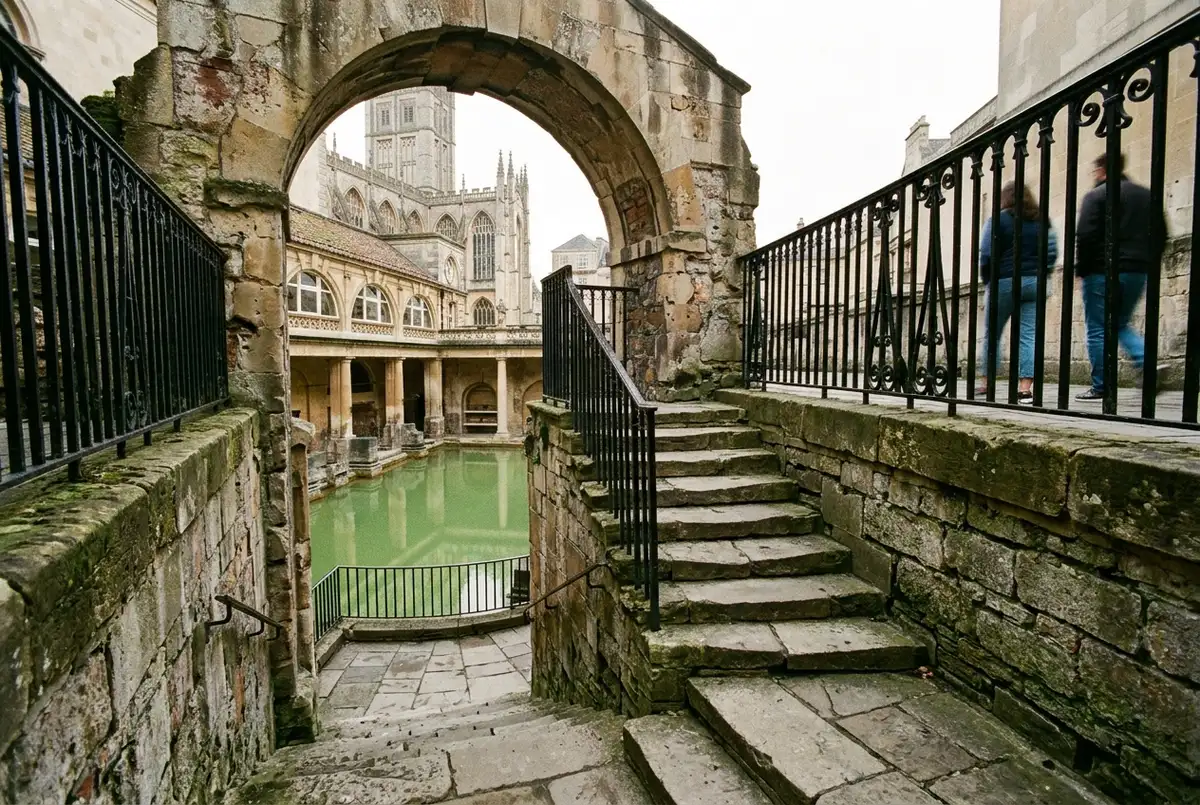
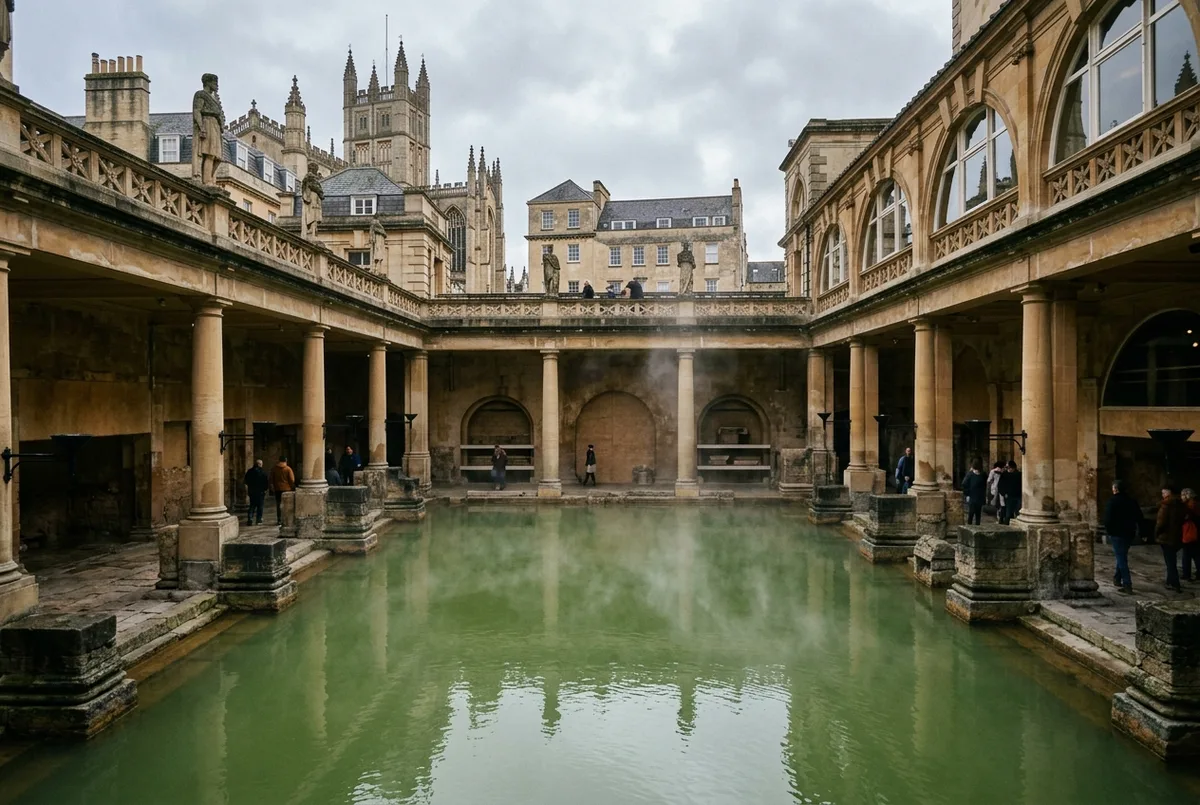
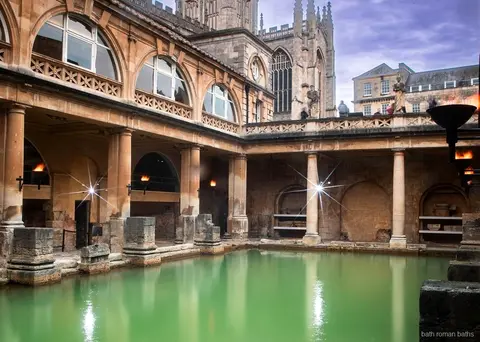
Most tablets are not generic hexes but prayers for justice over everyday losses: a stolen cloak, gloves, or coins. The petitioner named the suspect and asked the goddess to punish them until the item was returned. The Roman Baths’ site is direct about the tone: these are ordinary people, angry about modest losses that mattered a great deal to them at the time. Say you’re standing at the railed overlook above the Sacred Spring today, looking down at the same green water the tablets were pulled from in 1979 and 1980: picture folding a thin lead sheet shut around someone’s name, weighing whether a stolen wool cloak is worth naming a neighbour to a goddess over.
If the geology behind this same spring interests you, the hot spring behind the Roman Baths covers why the water never runs cold.
Why are the curse tablets significant today?
In 2014 the collection joined the UNESCO Memory of the World UK Register, the only Roman Britain objects to receive that status. A selection is on view in the museum’s Temple Worship area, beside where the temple itself once stood. The UK National Commission for UNESCO also notes one tablet appears to mix Celtic words into the Latin alphabet, and another holds the earliest known reference to Christianity found anywhere in Britain.
For a wider sweep of the site’s history in one place, see 10 facts about the Roman Baths, and for the full visitor route through the museum and the Great Bath, is the Roman Baths worth it walks through what you will actually see.
“They are the only objects from Roman Britain to receive this accolade.”
The Roman Baths, 2026 · source
Questions
Is Sulis Minerva the same goddess as the Roman Minerva?
Not quite. Sulis Minerva is a specifically Bath fusion: the Roman goddess Minerva merged with the local Celtic deity Sulis, who was worshipped at this spring before Rome ever arrived.
What language are the Bath curse tablets written in?
Latin, mostly, though one tablet appears to be Celtic words written in the Latin alphabet. UNESCO calls that tablet currently unique among the collection.
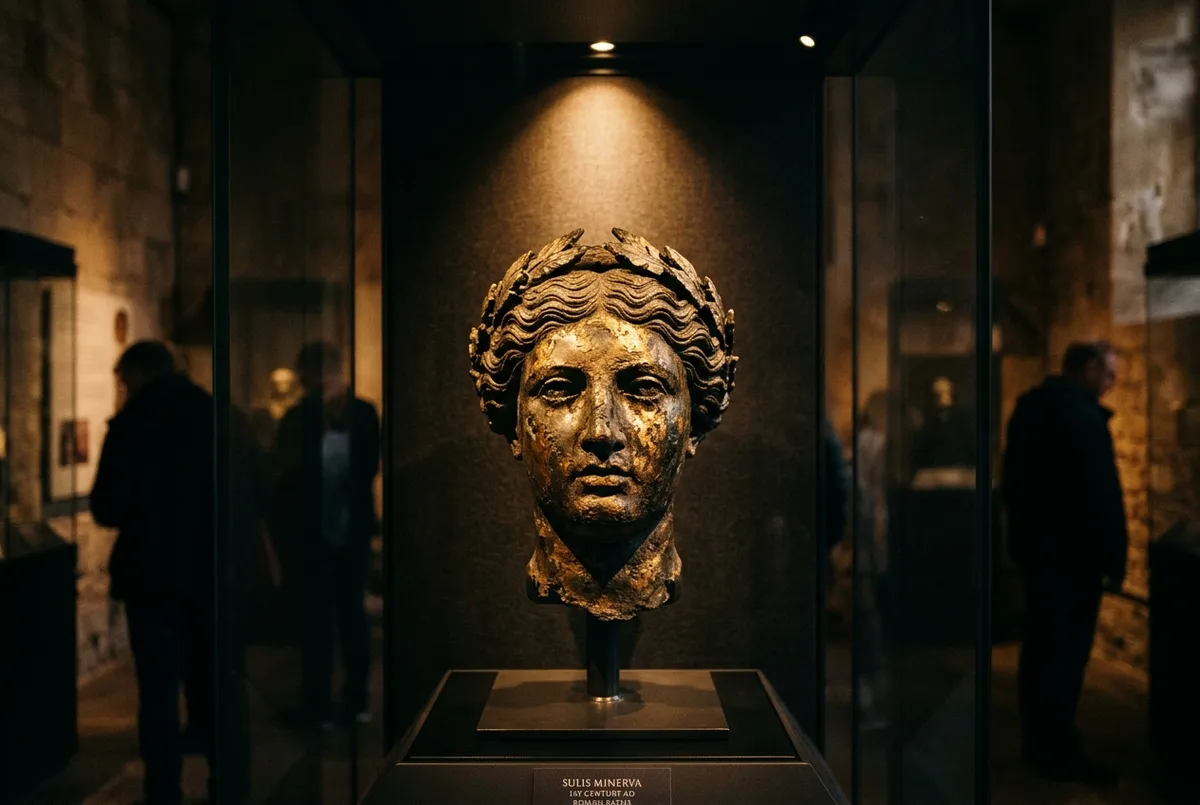
Where can you see the gilt bronze head of Sulis Minerva today?
In the Roman Baths museum, where it has been displayed since its discovery in Bath in 1727. It remains one of the collection’s most recognisable objects.
Did people only curse thieves, or did they also pray to Sulis Minerva for healing?
Both. Her Celtic origin was as a healing goddess of the spring, while the curse tablets show the justice seeking side that worshippers also turned to her for.