The Hot Spring Behind the Roman Baths: Why the Water Is Always Warm
Bath's hot springs explained: the geology, the 45C water, 42 minerals, and the link to Thermae Bath Spa a few minutes' walk away.
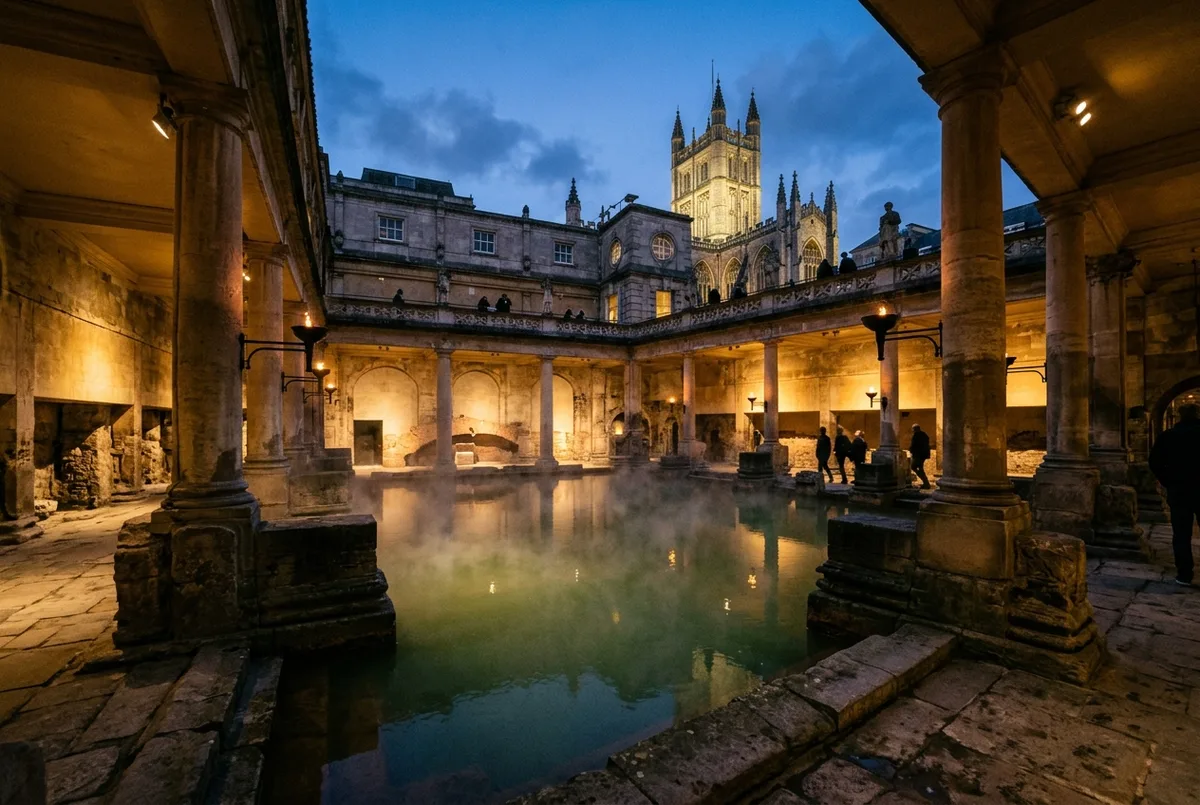
Yes, Bath's natural hot springs are still flowing today. Three springs rise in the city centre, delivering more than a million litres of mineral rich water a day at around 45C, the same source that feeds both the Roman Baths and Thermae Bath Spa.
 Roman Baths Entry Ticket with Audio Guide From $30.76 · Simplest way in, with an audio guide See dates
On this page 8 sections
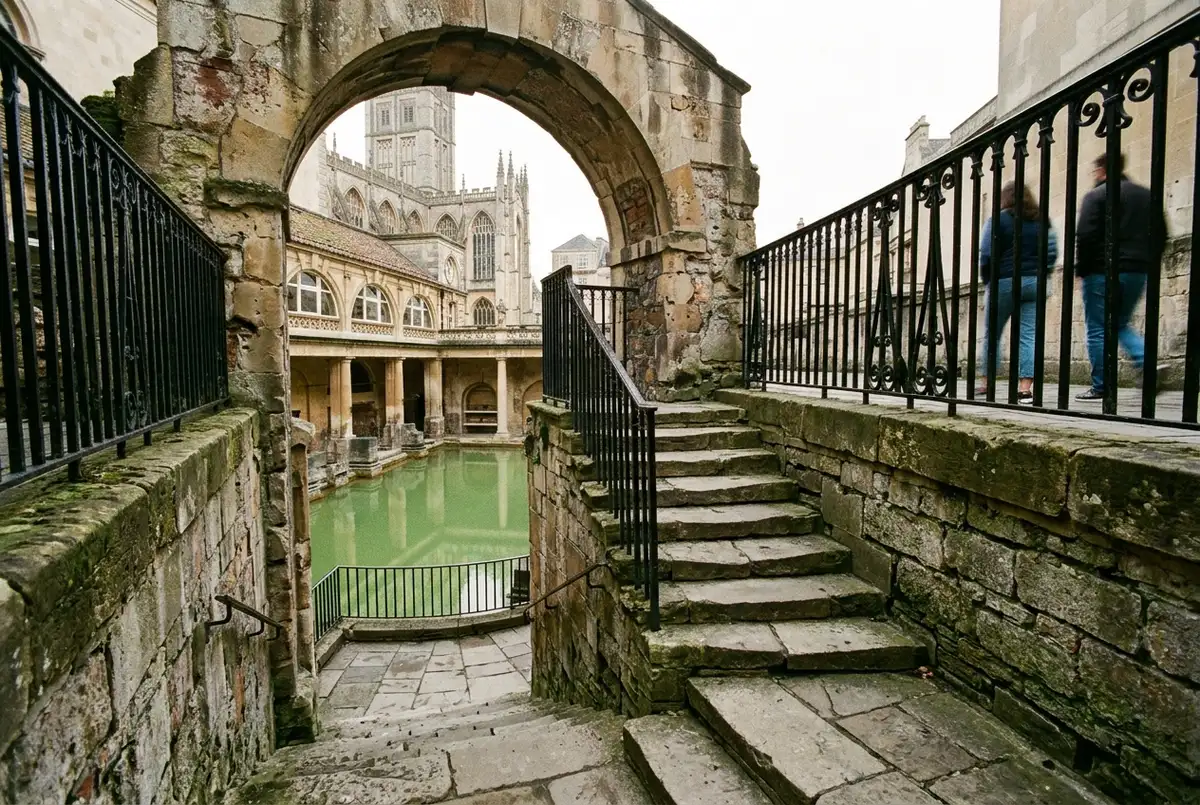
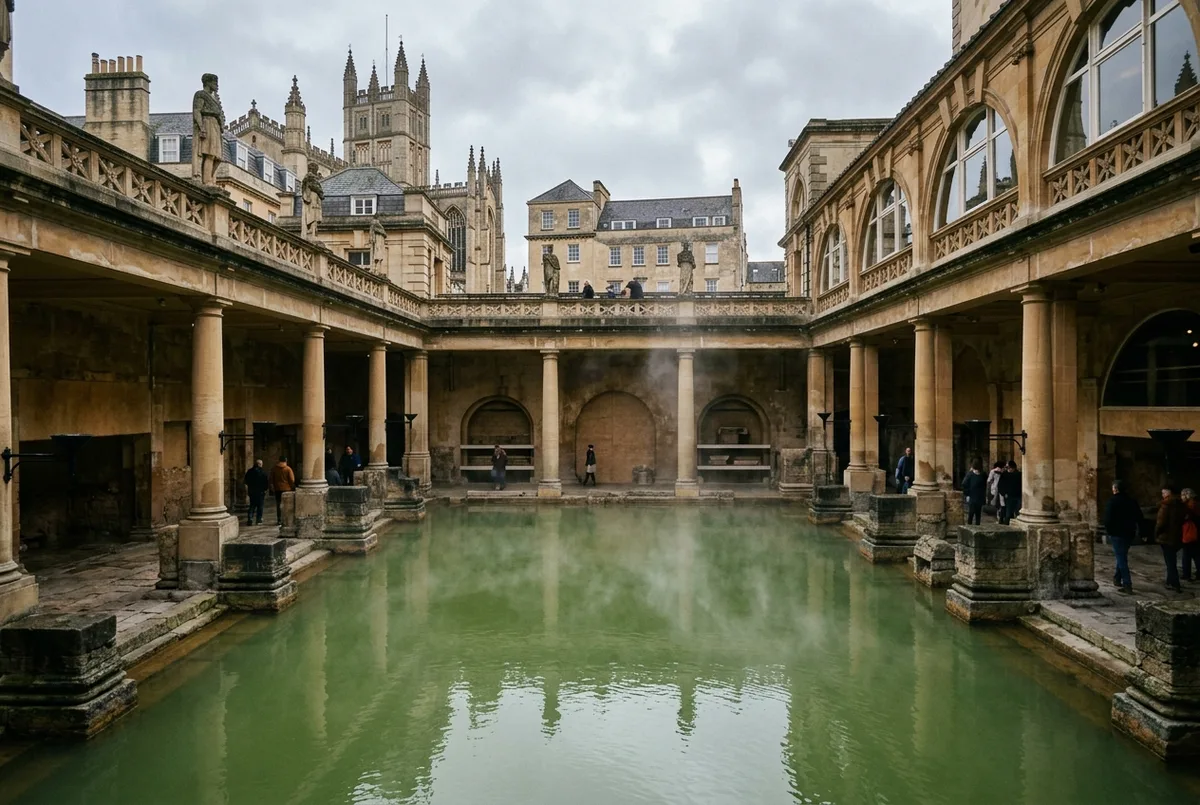
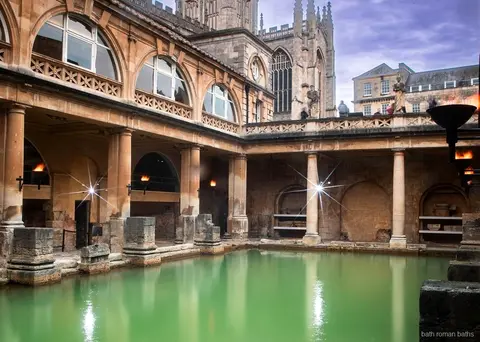
Bath’s hot springs are real, and they are still running. Three natural springs rise in the city centre today, and one of them, the King’s Spring, surfaces right inside the Roman Baths. I would not call this a historical curiosity: it is the same water, flowing on the same schedule, that has warmed the city for thousands of years.
The spring, by the numbers
Source:Thermae Bath Spa and Bath & North East Somerset CouncilAre there still hot springs in Bath?
Yes. Three natural springs still rise in the city centre today, delivering more than a million litres of mineral rich water a day, exactly as they have for thousands of years. Bath & North East Somerset Council names them the King’s Spring, the Hetling Spring and the Cross Spring, with the King’s Spring rising inside the Roman Baths Museum itself.
If you are picturing something rare, I’d say think again: these springs have run continuously since long before the Romans arrived, and nothing about them has slowed down.
Why is the water in Bath always warm?
Rain falling on the Mendip Hills sinks about 2km underground, where the earth’s natural heat warms it before it rises back up through cracks in the rock beneath the city. The Geological Society of London traces the path precisely: rainwater infiltrates the limestone south of Bath, flows north beneath the Somerset coal field to that depth, gains heat from the rock, then rises through fractures in the Jurassic rock under the city.
It is a slow process. Thermae Bath Spa says the water fell as rain around 10,000 years ago, then sank to roughly 2km down, where it reached an estimated 69C before starting its long journey back up.
How hot is the water at the Sacred Spring?
The council measures it at 40C or above at the surface; the spa that shares the same underground source puts the average nearer 45C, having started out an estimated 69C two kilometres down. Bath & North East Somerset Council states the water emerges at 40C or above, while Thermae Bath Spa’s own figure is an average of 45C at the surface. I’d treat the gap as two honest readings of the same source rather than a contradiction.
What minerals are in the spring water?
The water carries over 42 minerals and trace elements, dominated by sulphate, calcium and chloride, which is why the pools run slightly cloudy and faintly mineral scented. Thermae Bath Spa’s own figures put sulphate at 1,015 mg/l, calcium at 358 mg/l and chloride at 340 mg/l at the Hetling Spring, the most concentrated of the three.
“The water contains over 42 minerals and trace elements.”
Thermae Bath Spa, 2026 · source
Is the Sacred Spring the same water Thermae Bath Spa uses today?
It is one connected source: the King’s Spring that rises inside the Roman Baths also supplies Thermae Bath Spa, which draws further boreholes from the neighbouring Cross and Hetling Springs a few minutes’ walk away. Inside the Roman Baths, the Sacred Spring rises within the courtyard of the ancient Temple of Sulis Minerva, the same spot the Romans built their entire complex around.
Can you still bathe in Bath’s natural hot spring water?
Not at the Roman Baths, where the Sacred Spring is for viewing only, but yes at Thermae Bath Spa, where the same thermal water fills four public pools including a rooftop one. Say you’re leaning over the railing above the Sacred Spring, watching steam drift off that green tinged water, and wondering why nobody is swimming in it. The answer is a few streets away, not a few steps: Thermae Bath Spa cools the same water to about 34C for its Cross Bath, Hot Bath, Minerva Bath and rooftop pool.
| Sacred Spring (Roman Baths) | Thermae Bath Spa | |
|---|---|---|
| Access | Viewing only | Bathing allowed |
| Temperature | 40C+ at the surface | Cooled to about 34C |
| What you can do | Walk the ancient chamber and courtyard | Swim in four pools, including the rooftop one |
If you want to see where the Romans first captured this spring, what’s inside the Roman Baths covers the Great Bath and the museum route in full.
Is Bath the only place in the UK with a natural hot spring?
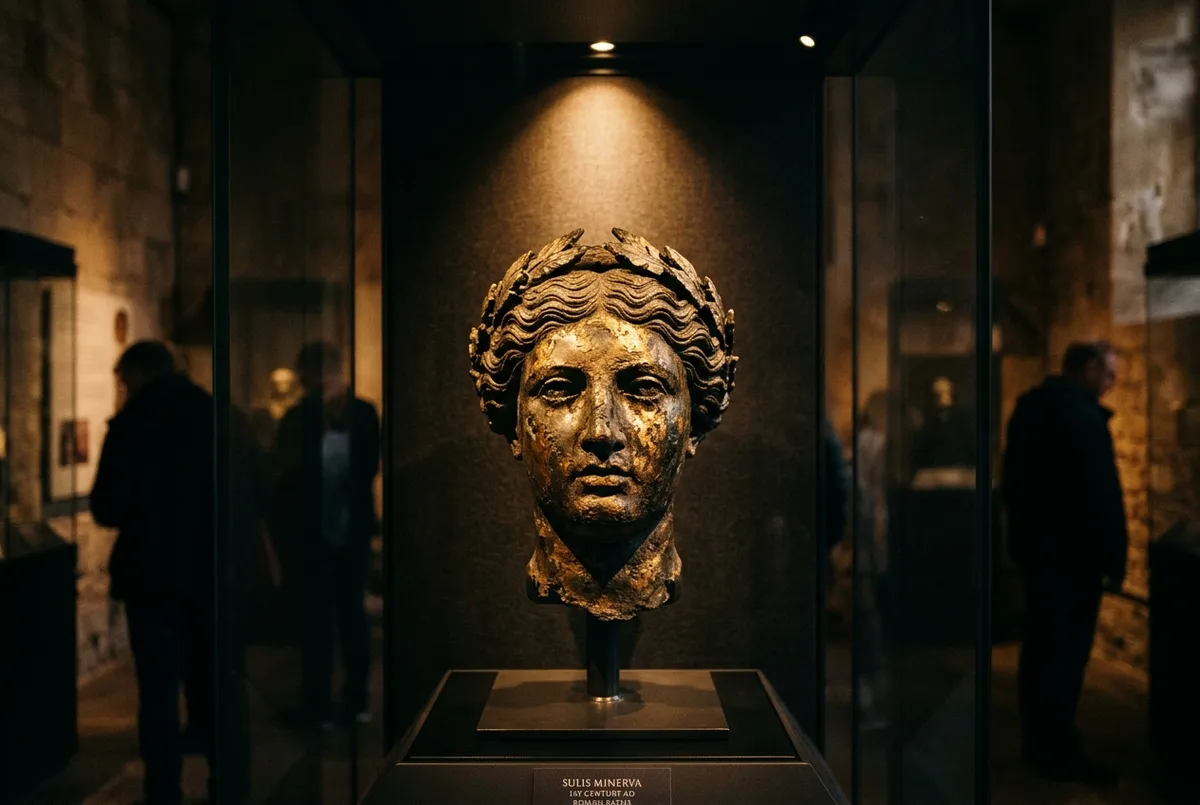
Bath’s is Britain’s best known and hottest, but the Geological Society of London also names Buxton and Harrogate among the UK’s other natural thermal and mineral springs. The Society is clear that thermal and mineral springs exist in several parts of the country, so Bath’s real distinction is scale and temperature, not uniqueness. For more on what makes this particular site significant, 10 facts about the Roman Baths rounds up the rest of the history in one place, and the goddess the Romans worshipped here is covered in Sulis Minerva and the sacred spring.
I would not plan a trip around “the only hot spring in Britain,” since that claim does not hold up. I would plan around the fact that this exact water has been rising, unbroken, for 10,000 years, which is remarkable enough on its own.
Questions
What is the Sacred Spring at the Roman Baths?
It is the natural hot spring at the heart of the ancient monument, rising inside the courtyard of the Temple of Sulis Minerva. Roman engineers built a lead lined stone chamber around it that still stands today.
How old is the water that rises in Bath?
Roughly 10,000 years old, according to Thermae Bath Spa, counting from when it fell as rain on the Mendip Hills. It has been sinking, heating and rising ever since on the same slow cycle.
Can you swim in the Sacred Spring itself?
No, and that has not changed: the Sacred Spring inside the Roman Baths is preserved for viewing, not bathing, which is exactly why the city built a separate bathing venue nearby instead.
How far is Thermae Bath Spa from the Roman Baths?
Just a few minutes’ walk. Both draw on the same underground source, so the short distance between them reflects shared geology, not a coincidence of planning.