The History of the Roman Baths: From Sacred Spring to Victorian Excavation
Roman Baths history: the sacred spring, Aquae Sulis under Rome, Saxon reuse, and the 1880 rediscovery, with the evidence behind each stage.
Roman Baths history spans 5000 BC flint-age activity at the spring, Roman construction from around 50 AD as the walled town Aquae Sulis, Saxon-era reuse, and rediscovery in 1727 and 1880 after centuries buried under later building.
 Roman Baths Entry Ticket with Audio Guide From $30.76 · Simplest way in, with an audio guide See dates
On this page 7 sections
Roman Baths history stretches back far further than the Romans themselves: flints found near the spring put human activity there as early as 5000 BC, with the site passing through Iron Age worship, Roman construction, Saxon reuse, and two separate rediscoveries before it became the museum you can visit today.
How far back does the site’s history actually go?
Flints found near the spring put human activity there as early as 5000 BC, long before anything Roman existed. The site’s own timeline treats that as its starting point rather than beginning the story with the Romans, which is a useful corrective: this was a significant place for thousands of years before Rome ever reached Britain.
Who worshipped at the spring before the Romans arrived?
Coins thrown into the spring suggest Iron Age people worshipped the goddess Sulis there from around 100 BC, before the Romans later linked her with their own goddess Minerva. Bath’s hot springs are the only ones in Britain, with 250,000 gallons flowing through them daily, which explains why a spring in this one spot became sacred in the first place.
What did the Romans call Bath, and when did they build here?
The Roman name was Aquae Sulis, a walled settlement built around the spring. The official timeline dates Roman arrival to about 50 AD, evidenced by coins found on site from that period. Bathing was central to Roman life in a way that’s quite different from today, since Roman bathing was a communal activity, which is why a shared complex this size anchored the whole settlement. English Heritage cares for more than 20 Roman bath-houses across the country, together offering a slice of a bathing culture that stayed central to Roman Britain for over 350 years, so Bath is one example of a much wider habit.
What happened to the baths after the Romans left?
The Roman buildings collapsed by around 500 AD, evidenced by the remains of fallen buildings found on site, and Saxons built a church near the spot by 675 AD, evidenced by Saxon skeletons uncovered there. By 1100 AD the spring had become important again for healing, with written documents, maps and surviving wall sections from that period.
“The Baths are discovered. We have photographs and letters.”
Roman Baths official site · source
When was the site rediscovered, and who found it?
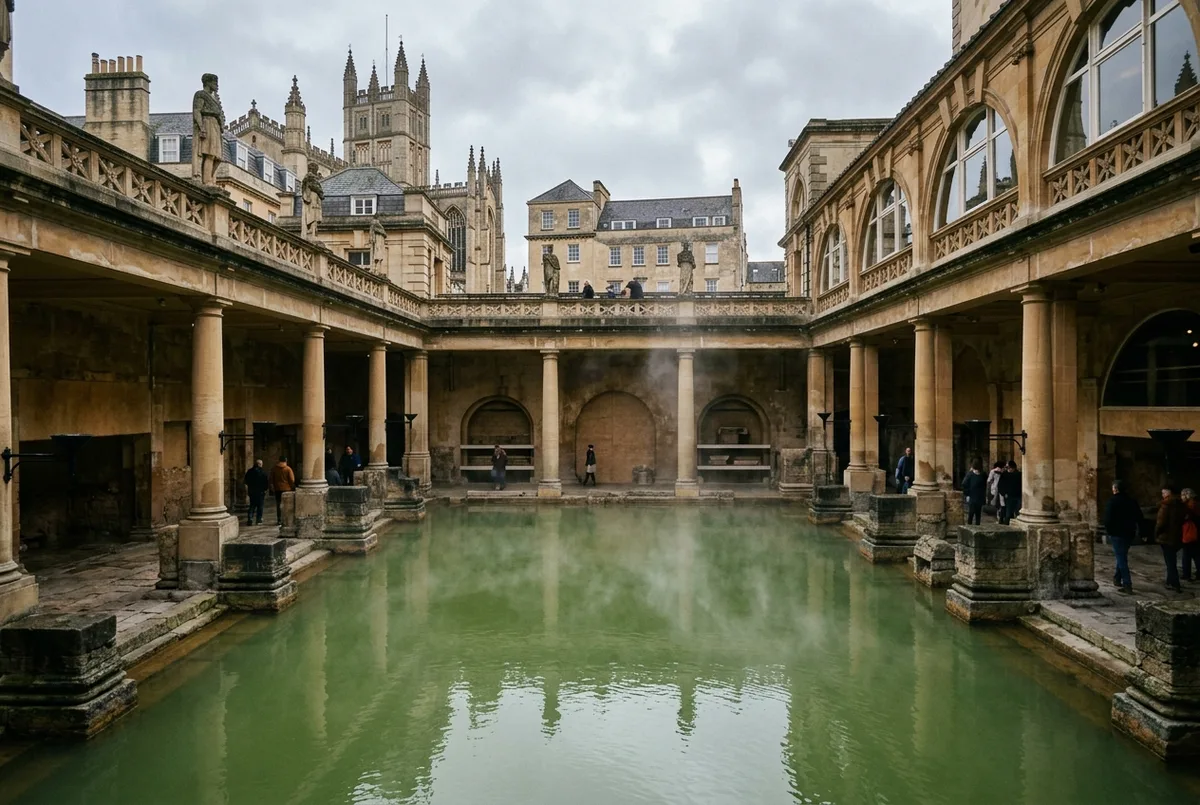
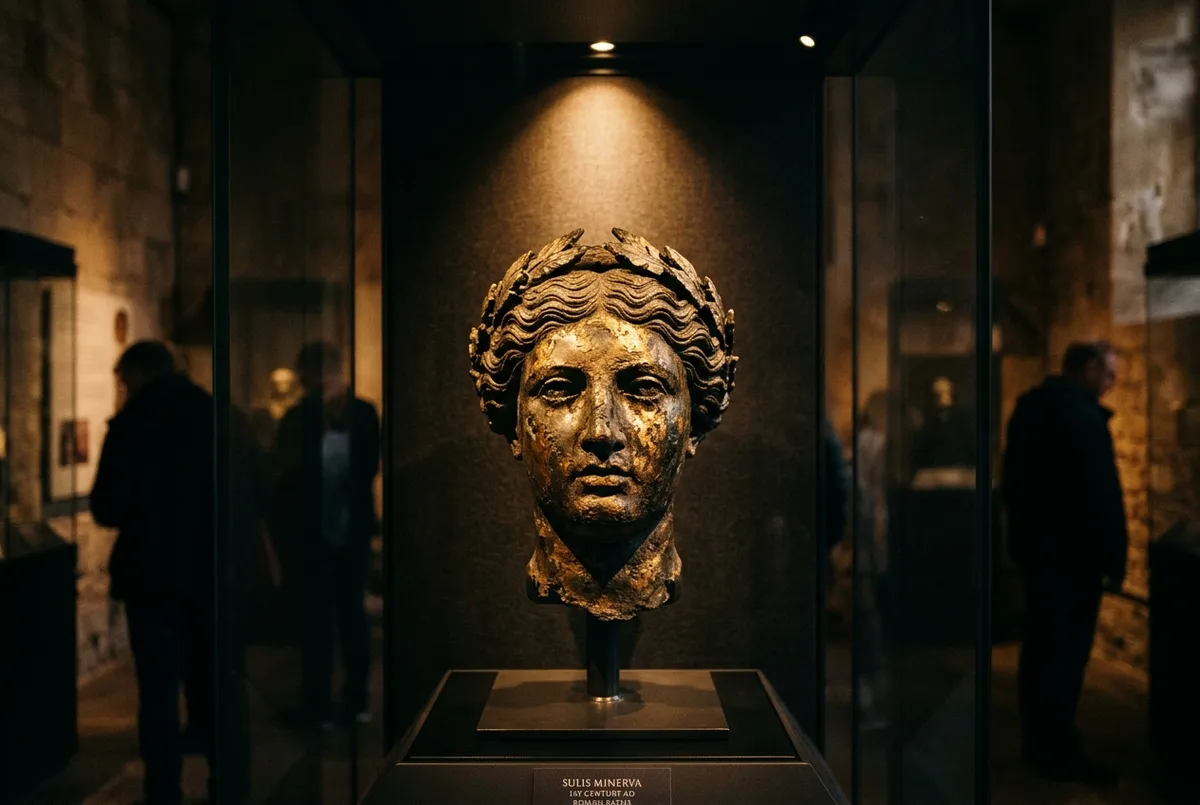
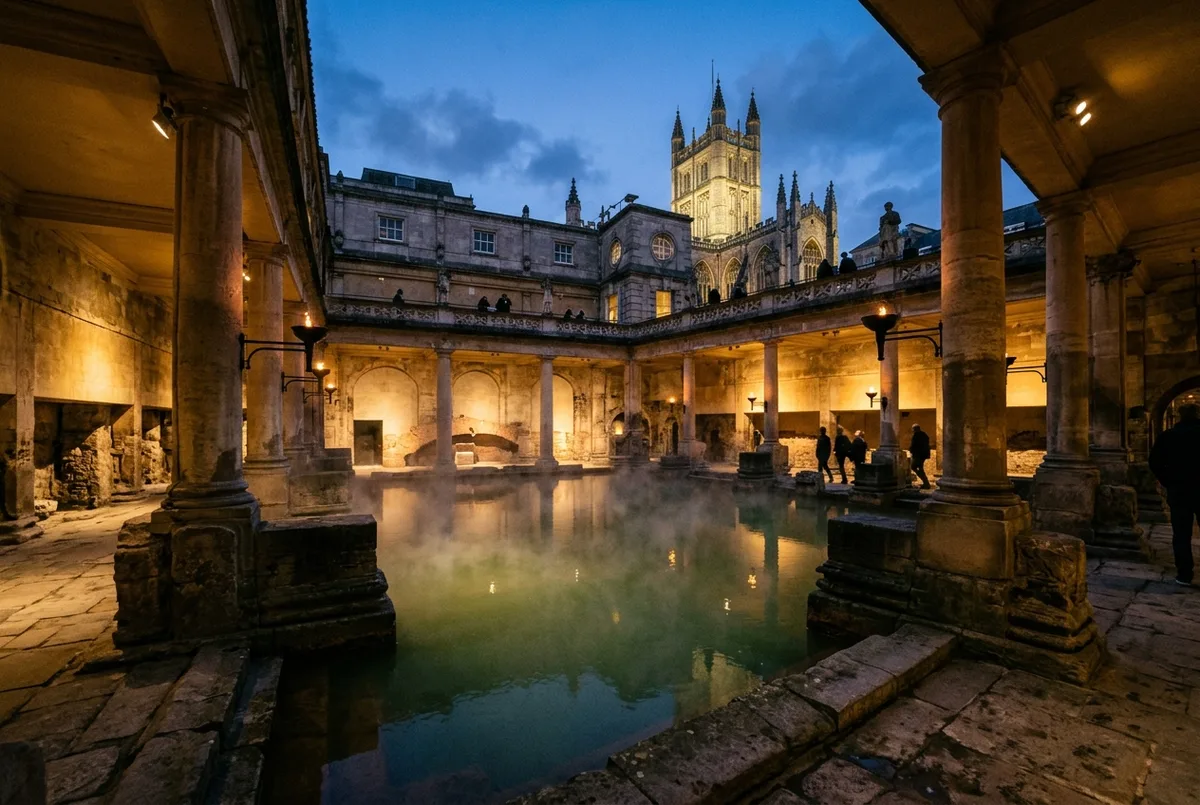
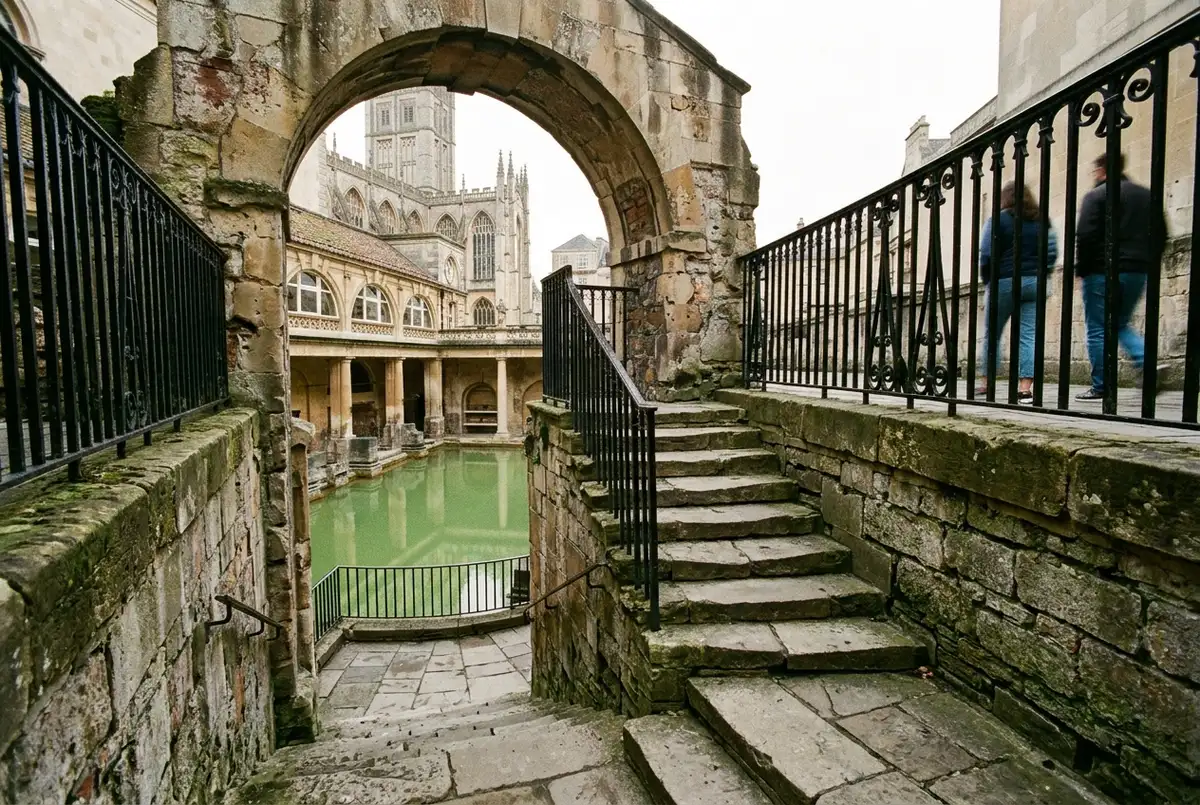
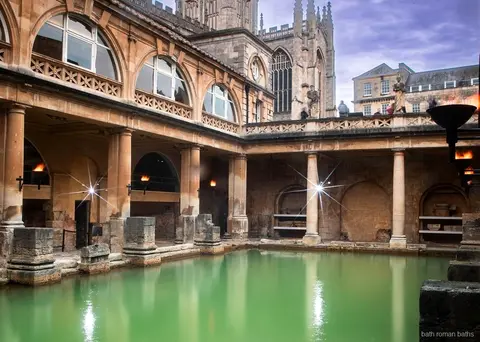
Picture standing on the Victorian-built walkway around the Great Bath and assuming the stonework you can see is all Roman. It isn’t: Minerva’s Head and parts of the Temple turned up in 1727, recorded in newspaper reports of the time, and the wider Baths themselves weren’t actually discovered until 1880, documented in photographs and letters from the excavation. Much of what you walk on today, including the railings and the surrounding terrace, is Victorian-era construction built to display the Roman remains, not Roman fabric itself. Archaeologists excavated the Temple courtyard again in 1981, adding reports, photographs and further Roman finds.
| Date | Event | Evidence |
|---|---|---|
| 5000 BC | People hunt near the spring | Flints found on site |
| 100 BC | Iron Age worship of Sulis | Coins thrown into the spring |
| 50 AD | Romans arrive | Coins of this date |
| 500 AD | Roman buildings collapse | Remains of fallen buildings |
| 675 AD | Saxons build a church nearby | Saxon skeletons |
| 1100 AD | Spring becomes a healing site again | Written documents, maps, surviving walls |
| 1727 | Minerva’s Head and Temple parts found | Newspaper reports |
| 1880 | The Baths discovered | Photographs and letters |
| 1981 | Temple courtyard excavated | Reports, photographs, finds |
Key dates
Source:UNESCO UK National CommissionWhy did Bath become a UNESCO World Heritage Site?
Bath holds a double UNESCO inscription: as the City of Bath in 1987, and again in 2021 as part of The Great Spa Towns of Europe, with the Roman Baths and Temple remains named specifically within the city’s World Heritage significance. The inscription covers the entire urban area, a situation seldom seen elsewhere worldwide, rather than a single building or monument.
For the generic mechanics of how a Roman bath house like this one actually worked, see the bath house explainer; for what you’ll actually see on a visit today, see the worth-it pillar.
Questions
What is Aquae Sulis, and does the name still mean anything today?
Aquae Sulis was the Roman name for the settlement, meaning roughly “the waters of Sulis.” The name survives in the goddess Sulis Minerva, whose gilt bronze head is one of the best-known objects from Roman Britain and is on display in the museum.
Did archaeologists keep finding new parts of the site after 1880?
Yes. A further excavation of the Temple courtyard took place in 1981, adding reports, photographs and more Roman finds to the collection.
Is Bath’s World Heritage status only about the Roman remains?
No. The City of Bath’s 1987 inscription and the 2021 Great Spa Towns of Europe listing cover the whole urban area and its spa heritage, with the Roman Baths named as one significant part of that.
What is the Beau Street Hoard, and what period of Roman rule does it span?
It’s 17,660 Roman coins spanning 32BC to 274AD, found in Bath in 2007, covering roughly three centuries of Roman coinage in a single discovery.