10 Facts About the Roman Baths You Probably Didn't Know
Roman baths facts: the real age of the site, the lead lined floor, the curse tablets, visitor numbers and why Bath made UNESCO twice.
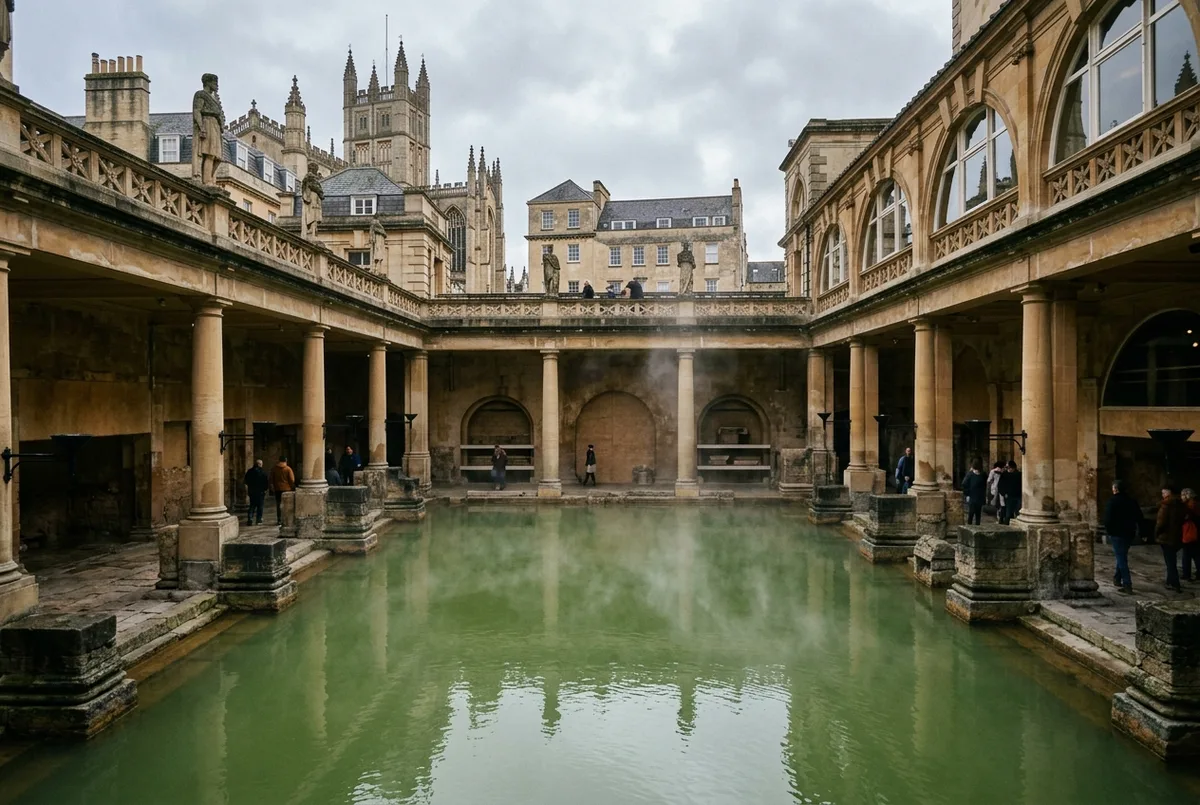
The Roman Baths are nearly 2,000 years old, built around Britain's only natural hot spring, with a lead lined Great Bath, 130 curse tablets found in the spring, and more than 1 million visitors a year.
 Roman Baths Entry Ticket with Audio Guide From $30.76 · Simplest way in, with an audio guide See dates
On this page 8 sections
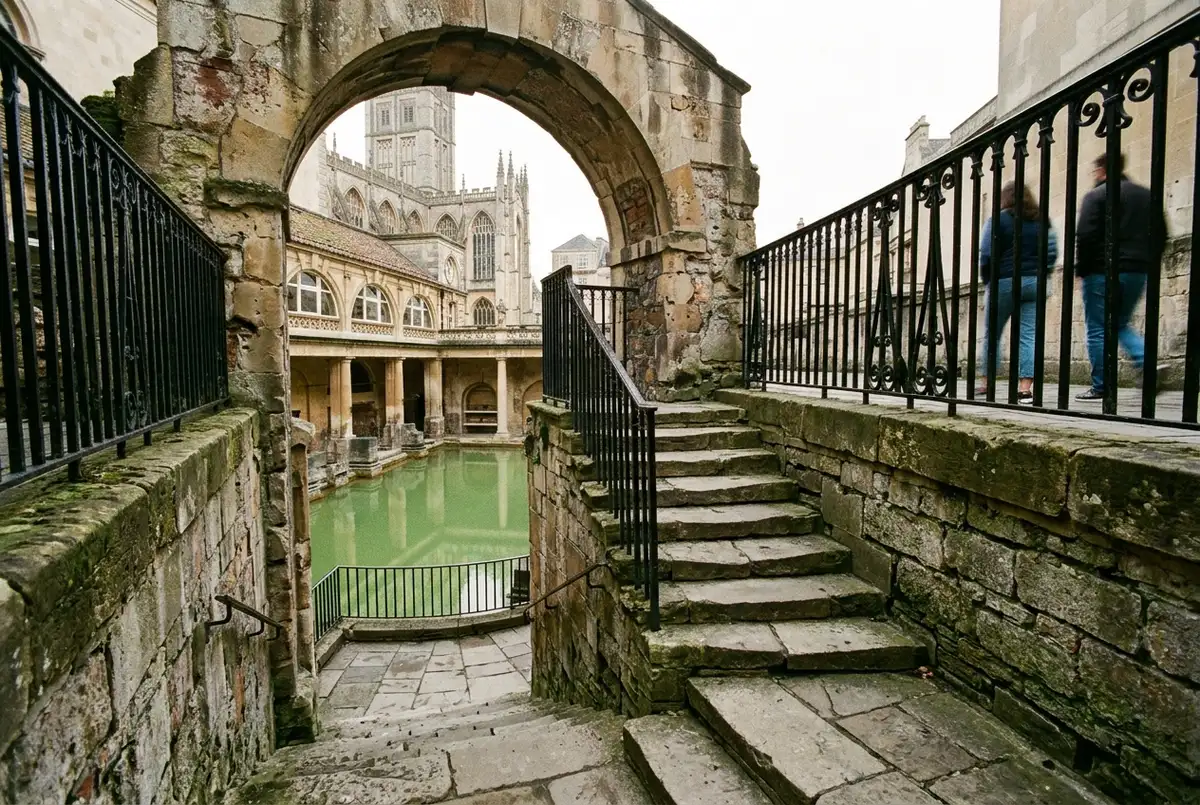
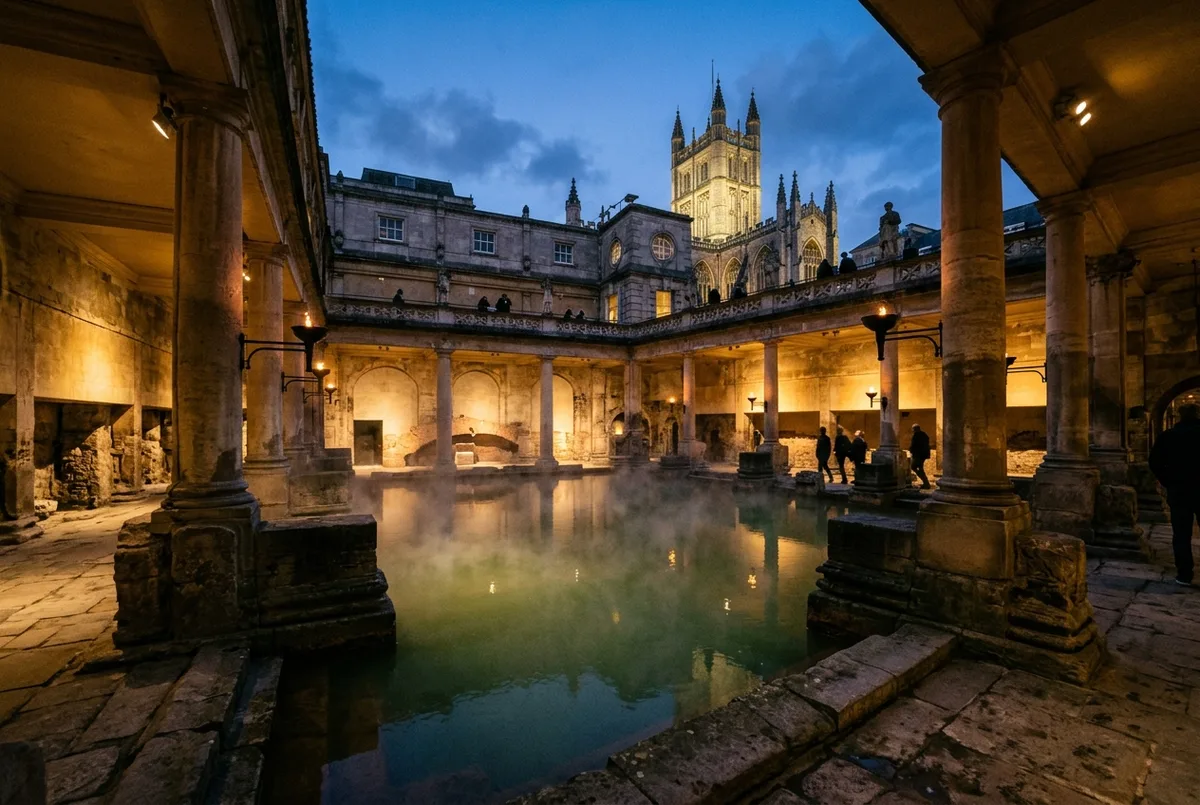
The Roman Baths are nearly 2,000 years old, and the single fact I would lead with is one most lists skip: the site was built around what is still, as the official site puts it, Britain’s only natural hot spring of its kind. Everything else about the place follows from that.
Roman Baths at a glance
Source:Roman Baths official site and WikipediaHow old are the Roman Baths?
The temple on the site went up between 60 and 70 AD, in the first decades of Roman Britain, making the complex nearly 2,000 years old. Iron Age worship at the spring goes back further still, to around 100 BC. The official timeline marks Iron Age coins thrown into the spring as the earliest evidence of worship here, decades before Rome ever arrived.
What is the hot spring behind the Roman Baths?
The Baths were built around Britain’s only natural hot spring of this kind. Water rises at 46 degrees C and flows at roughly 1,170,000 litres a day, which is why the Romans built here and nowhere else in the country. For the geology behind that number, the hot spring behind the Roman Baths covers how the water gets warm in the first place.
What is the lead lined floor of the Great Bath?
The Great Bath’s floor, and the chamber around the sacred spring, were lined with lead quarried from the Mendip Hills. It is one of the clearest signs of how seriously Roman engineers treated waterproofing this pool. Wikipedia’s summary of the site’s construction notes the lead lining directly, nearly 2,000 years before modern waterproofing existed.
Who was Sulis Minerva and what curse tablets were found?
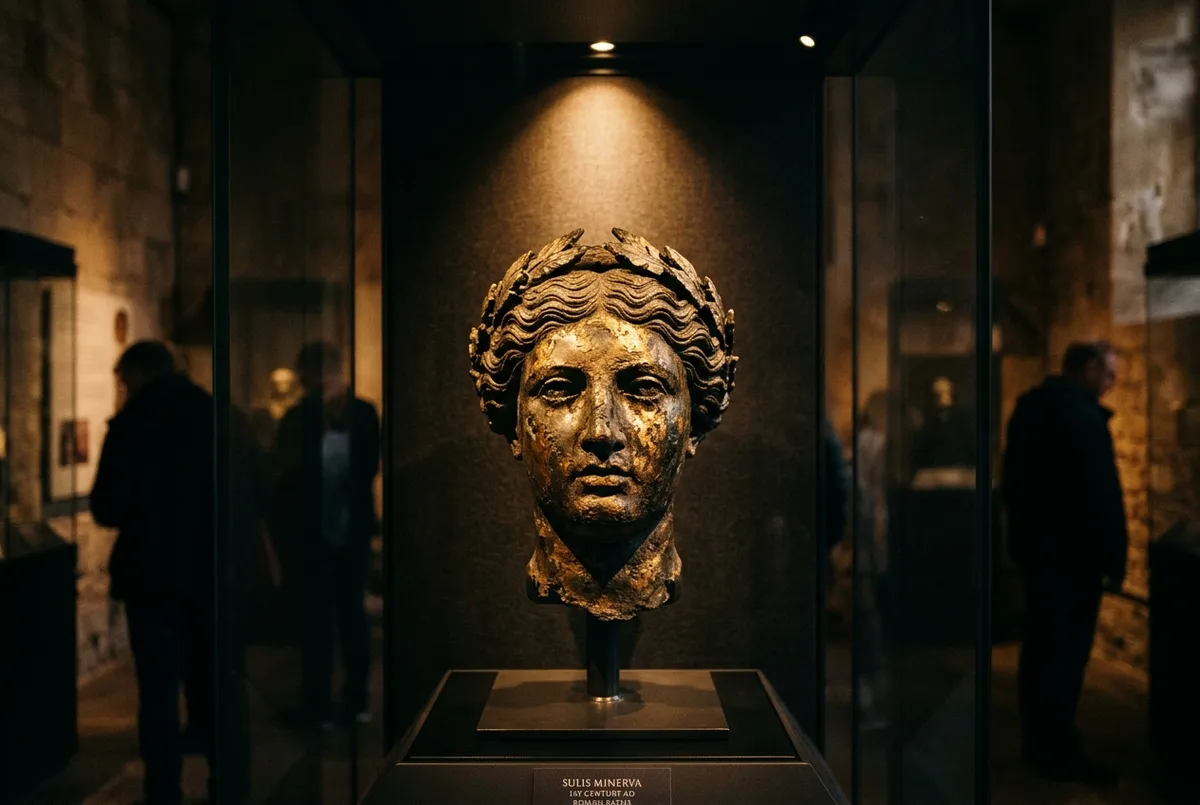
Sulis Minerva was the goddess the Romans worshipped at the spring, fusing a local Celtic deity with their own Minerva. Visitors threw in 130 curse tablets, many of them angry notes about stolen bathing clothes. I would call this the single most human fact on the site: the full story, including what people actually wrote, is in Sulis Minerva and the sacred spring.
| # | Fact | Figure | Source |
|---|---|---|---|
| 1 | Temple first built | 60-70 AD | Wikipedia |
| 2 | Spring water temperature | 46C | Wikipedia |
| 3 | Water flow rate | 1,170,000 litres/day | Wikipedia |
| 4 | Great Bath floor | Lined with Mendip lead | Wikipedia |
| 5 | Curse tablets found | 130 | Wikipedia, Roman Baths |
| 6 | Annual visitors | 1,000,000+ | Wikipedia (ALVA) |
| 7 | UNESCO listing (city) | 1987 | UK National Commission for UNESCO |
| 8 | UNESCO re-inscription | 2021, Great Spa Towns of Europe | UK National Commission for UNESCO |
| 9 | Minerva’s head discovered | 1727 AD | Roman Baths timeline |
| 10 | Baths rediscovered | 1880 AD | Roman Baths timeline |
How many visitors do the Roman Baths get each year?
The Roman Baths, together with the Grand Pump Room next door, draw more than 1 million visitors a year, putting the site among the UK’s most visited paid attractions outside London. That figure comes from ALVA data as quoted by Wikipedia, and I’d treat it as a rounded, ongoing figure rather than a single dated snapshot.
Why are the Roman Baths a UNESCO World Heritage Site?
The whole city of Bath, not just the baths building, became a UNESCO World Heritage Site in 1987, and was inscribed a second time in 2021 as part of the Great Spa Towns of Europe. The Roman Baths and the temple of Sulis Minerva are named as the core of that Roman heritage. The UK National Commission for UNESCO is specific that Bath’s Roman remains, centred on the Baths, are part of what earned both listings.
Can you still bathe in the Roman Baths today?
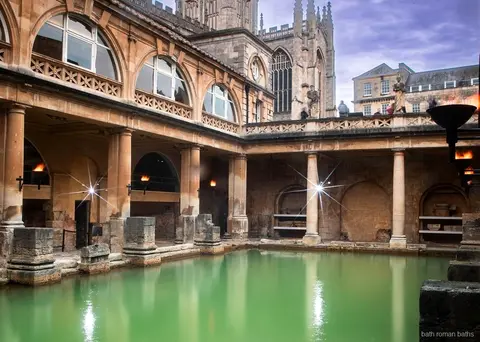
No. You can walk the full 2,000 year old bathing complex, but stepping into the water itself is not allowed anywhere on site today. Say you are standing at the rail above the Great Bath, watching the green water steam in the cold air, and wondering whether anyone still gets to swim in it: the official site is clear that the complex is for exploring, not bathing, though the baths “will be familiar to the modern spa goer.”
If you want to plan an actual visit around these facts, is the Roman Baths worth it weighs up who should go and who might skip it, and what’s inside the Roman Baths walks the real visitor route room by room.
Questions
What are 5 facts about the Roman Baths?
The site is nearly 2,000 years old, was built around Britain’s only hot spring of its kind, has a lead lined Great Bath floor, held 130 curse tablets found in its sacred spring, and draws over 1 million visitors a year.
What are 10 interesting facts about the Roman Baths?
See the table above: age, spring temperature and flow, the lead floor, the curse tablets, visitor numbers, two UNESCO listings, and the 1727 and 1880 discovery dates all make the list.
What is the real Roman name for the Roman Baths?
Aquae Sulis, meaning “the waters of Sulis,” named for the goddess the Romans worshipped at this exact spring.
How many years ago were the Roman Baths built?
The temple went up between 60 and 70 AD, roughly 1,960 years ago from today, with worship at the spring itself going back further to around 100 BC.